Choose a subject before setting out
A photo walk in Chemnitz does not require visiting every well-known building. A theme makes selection easier: window shapes, the contrast between stone and glass, or the relationship between a building and its square. The official architecture overview offers starting points from the centre to residential districts. Begin with one connected area so that there is time to observe rather than continually move on.
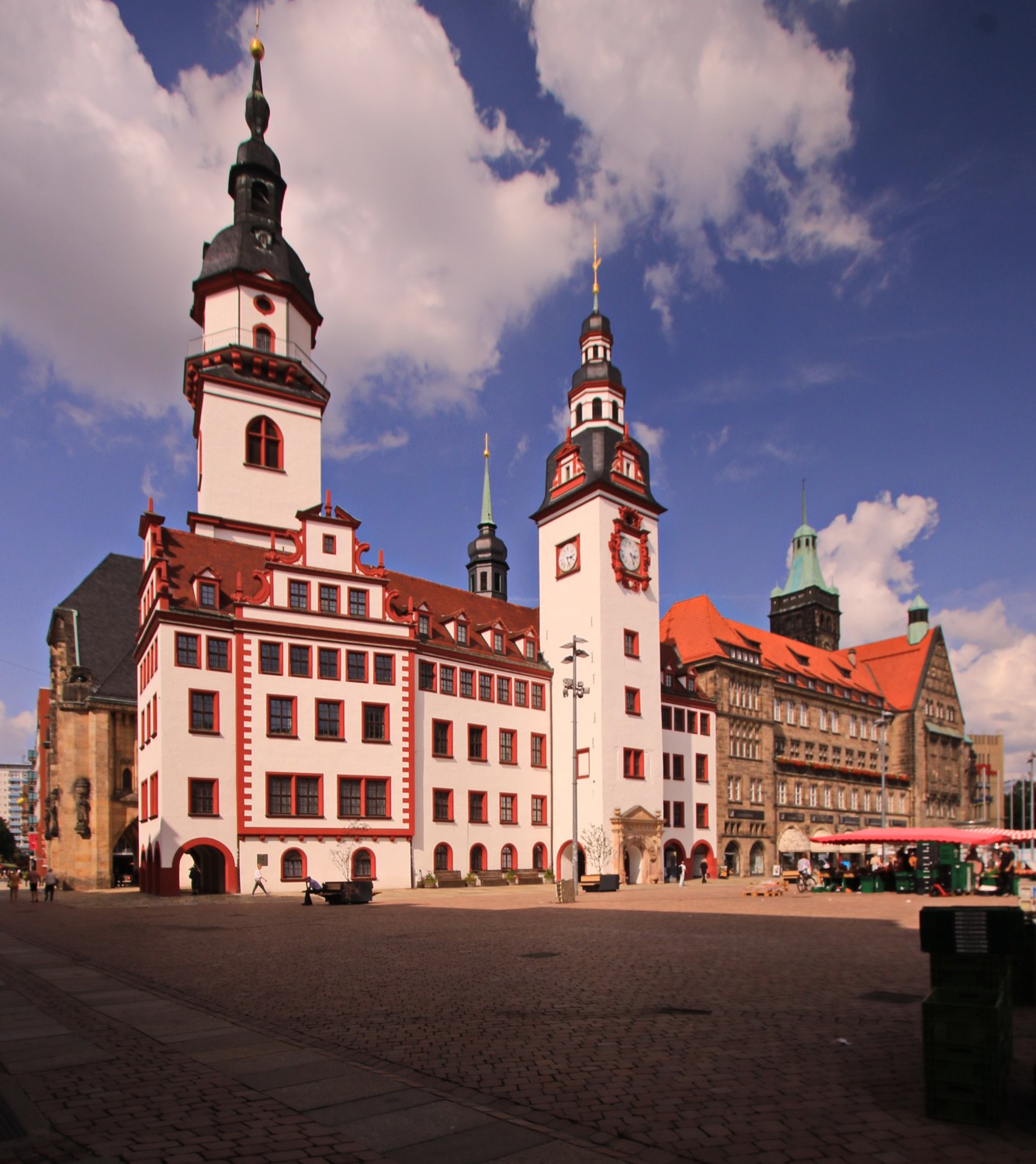
Around the market, take an overview before selecting a detail. The first picture explains where a building stands; the second shows what caught your attention. Photographing only details can leave the spatial context unclear when you look back later. Note the building's name or location, particularly when several similar façades appear in the same sequence of photographs.
Look for contrasts, not just landmarks
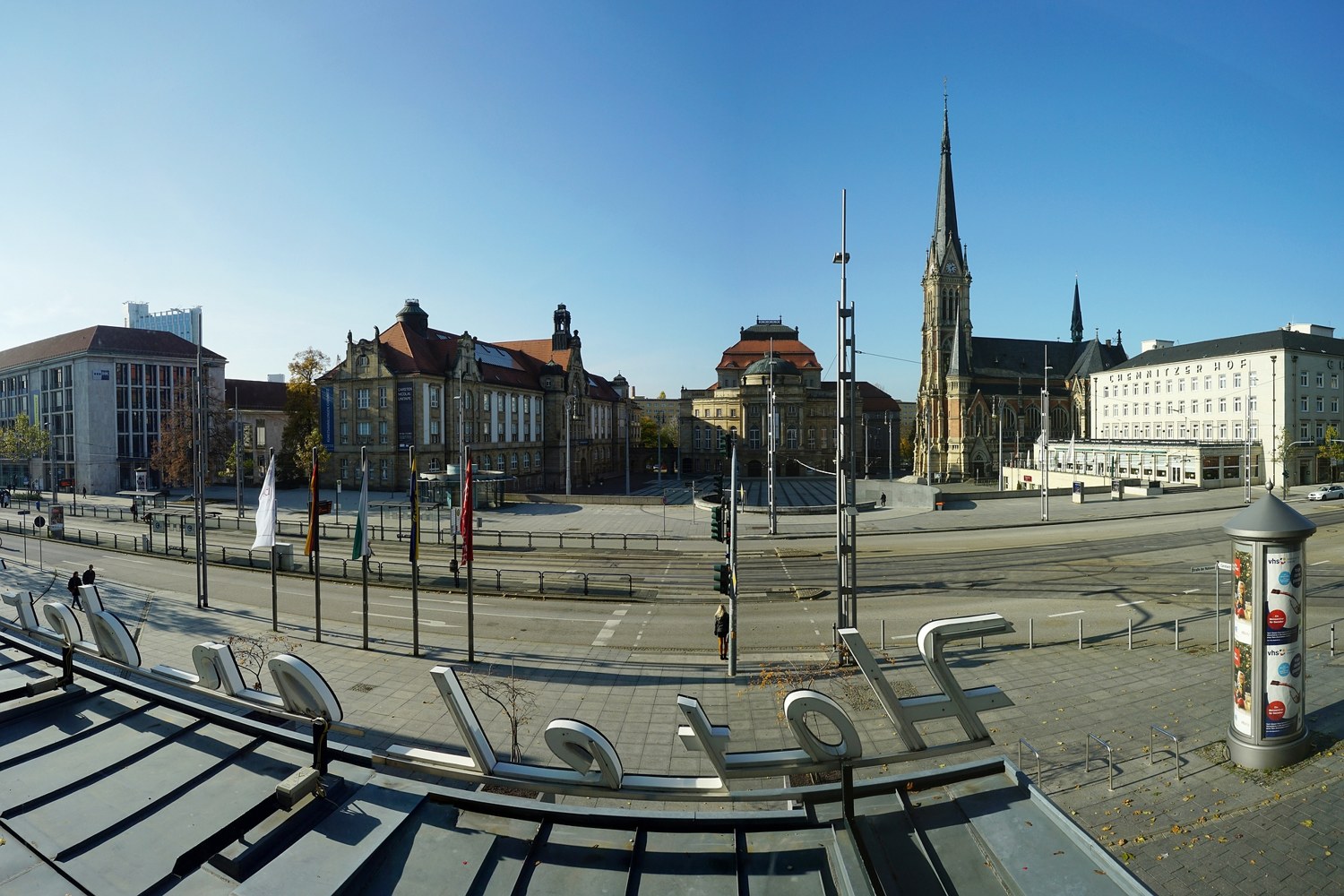
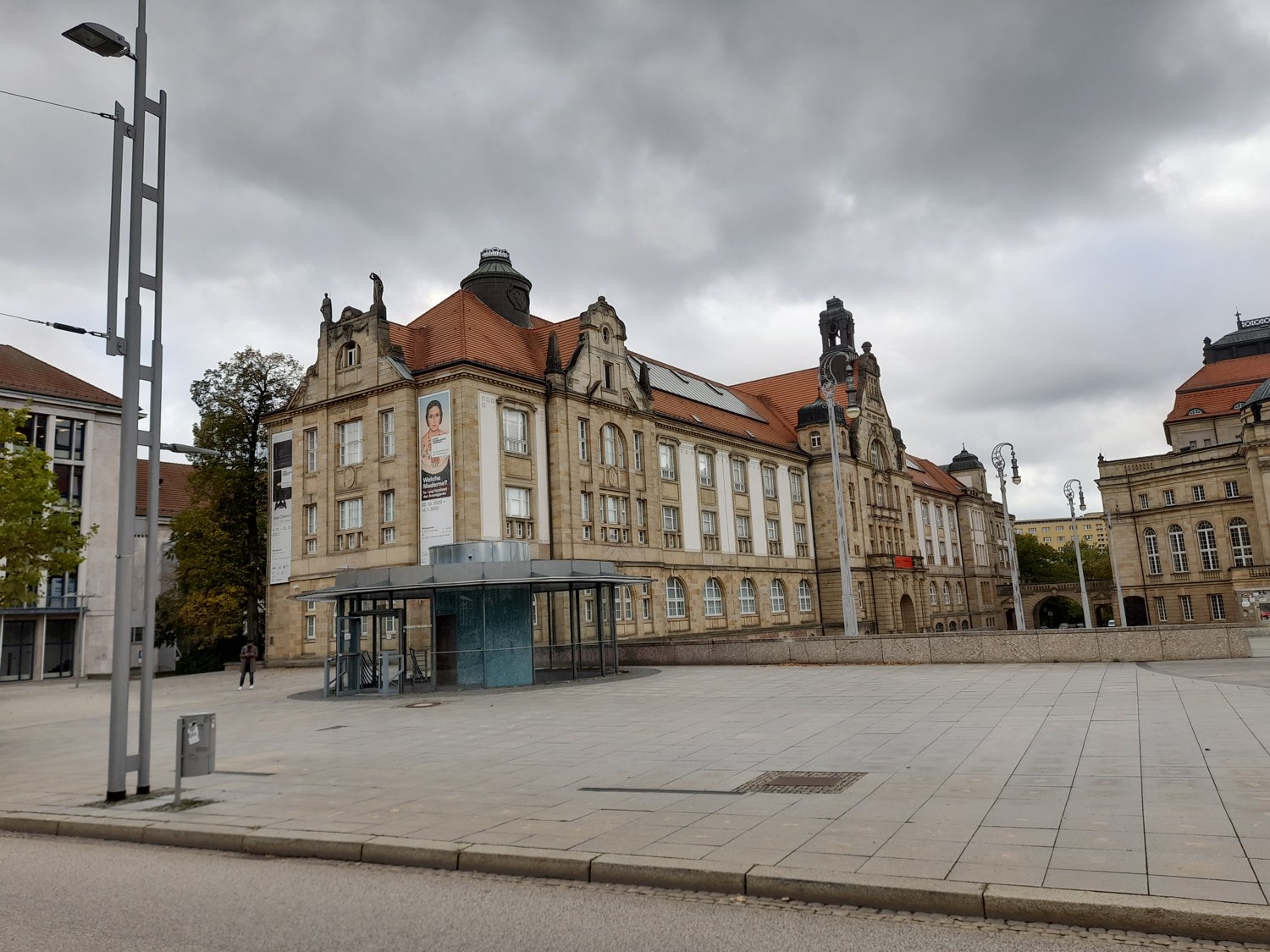
The Karl Marx Monument invites a different approach from the ensemble at Theaterplatz. At the monument, scale and surroundings may be the subject; at Theaterplatz, the relationship between several buildings. Avoid forcing the same composition onto every location. A wide view can explain a square, while elsewhere a side view of a single building may show its form more clearly.
The former Schocken department store offers another starting point through its façade. Look at the lines without the camera first, then choose a position. A photograph need not contain the entire building, but it should communicate what interests you about the shape. Use publicly accessible spaces and abandon an angle that would require obstructing traffic or blocking an entrance.
Use a neighbourhood for a second series
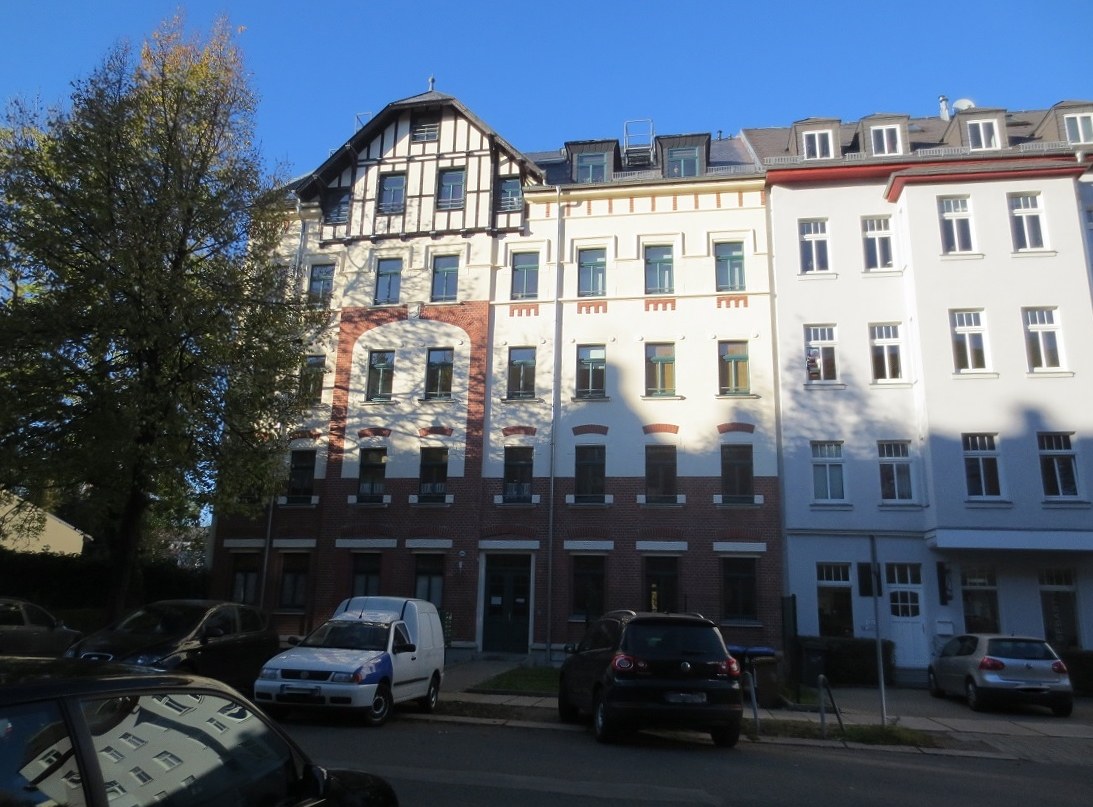
Kaßberg works as a separate walk with a narrower theme. Doorways, projecting windows and façade details create a different sequence from the large squares in the centre. Remain on publicly accessible routes and treat residential buildings as people's homes. An open door is not an invitation to enter a hallway or courtyard for a photograph.
Do not select only the most conspicuous ornament. A plain section between elaborately decorated façades can make their differences more visible. A street view containing several houses also helps put the details in context. A series needs only a few carefully chosen subjects; adding more similar close-ups does not automatically make it more informative or more interesting to look through later.
Notice light and local rules
Returning to a place can be more rewarding than adding another district. Different light changes shadows, reflections and the visibility of surfaces, so cloud cover need not cancel the walk. For photographs inside museums, check the individual venue's rules. Being able to take pictures from a public street says nothing about permission for flash, tripods or photography inside an exhibition.
After the walk, review pictures in small groups: overview, middle distance and detail. Remove photographs that repeat the same point and retain those that explain a relationship. If identifiable people are the main subject, treat later publication as a separate decision and establish what permission or other requirements apply. A city can often be described visually without making a stranger's face the central subject of the image.