Use Grünthal as the precise destination
For the Saigerhütte, entering only Olbernhau as the destination is not enough. The museum is in Grünthal. Save the actual visitor address and check the route from the point where you arrive. Before a fixed tour, include that final stage as well as time to find the entrance and arrange admission.
The Saigerhütte can form the main part of an outing from Chemnitz. A town walk may be added, but does not automatically need an equal share of the day. Someone interested in technology and working life may gain more from an attentive museum visit than from linking several distant places. First decide what you want to understand on site.
Distinguish processing from extraction
The official account dates the works to 1537 and explains that it was founded to extract silver from silver-bearing black copper. This is a metallurgical process, not the mining of ore underground. Keeping that distinction in mind helps place the site within a larger chain: a works processes material that has already passed through another stage of production.
You do not need to master the technique before arriving. Begin with the question of which steps turned incoming material into a useful product. Listen for the roles of heat, movement and human labour. If a term is unfamiliar, ask what it does in the sequence rather than simply writing down its name.
Read the buildings as a working system
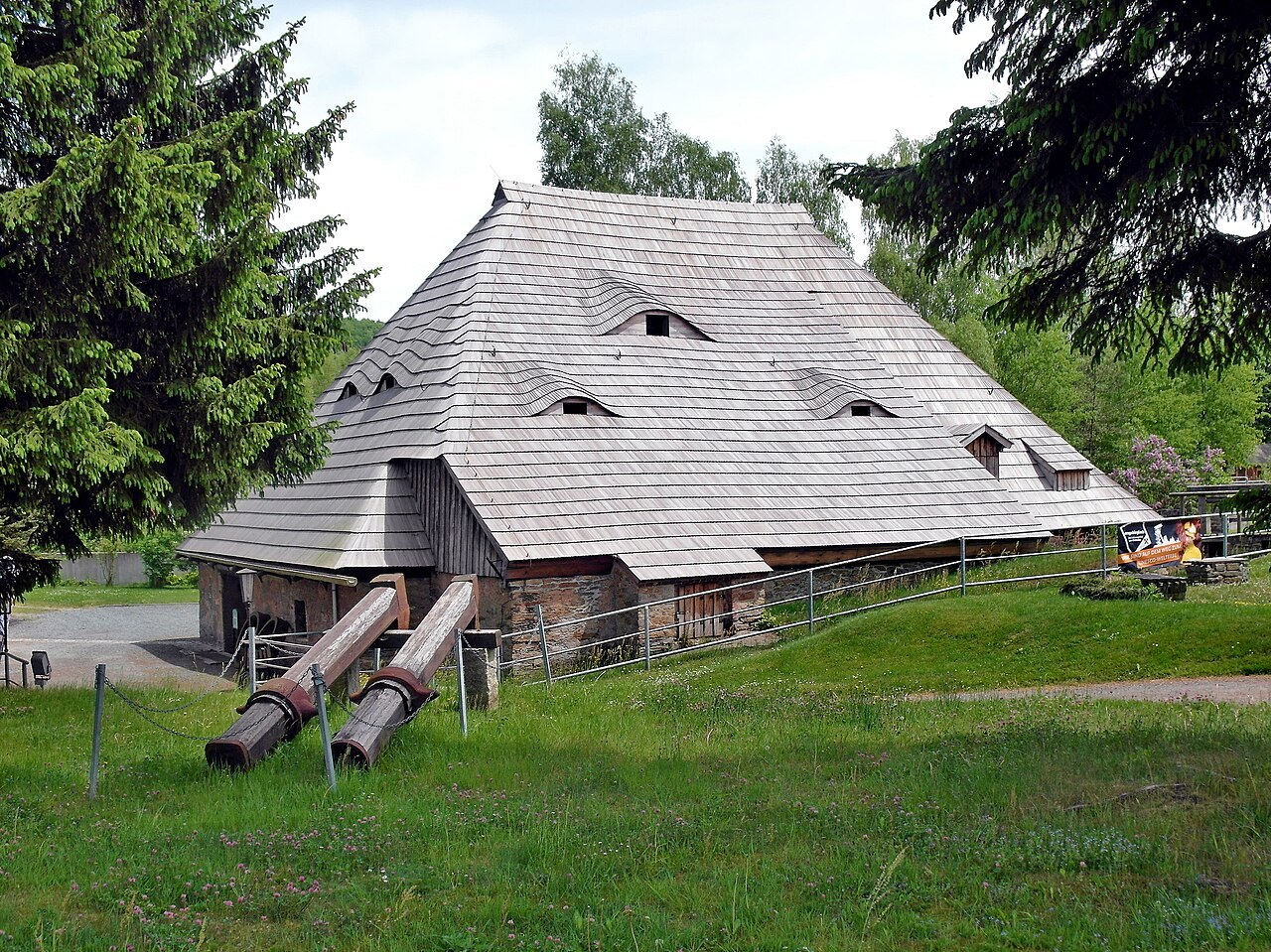
The Saigerhütte forms part of the Erzgebirge/Krušnohoří Mining Region World Heritage site. Its significance includes the surviving architectural and technical ensemble. Do not move only from one striking object to the next. Consider the spaces between buildings and the journeys that people and materials had to make through a working place.
The Althammer building in the photograph belongs to that ensemble. An exterior image shows form and setting, but not how the technology explained inside functioned. Use the museum’s interpretation to connect visible structures with working processes. During demonstrations, follow staff instructions: visitor areas are not freely usable workshop space.
Follow copper towards its later use
The official description also identifies copper working as a major activity and discusses roofing copper from Grünthal. This suggests another question: how does a material move from manufacture into a building? Several decisions lie between raw material, processing and final use, and a machine viewed alone does not explain them all.
Notice the difference between tools, machines and finished objects. A large piece of equipment easily attracts all the attention, while an unassuming workpiece may reveal the purpose more clearly. With children, that distinction can become something to look for without turning the visit into a competitive checklist.
Let the guided visit shape the timing
Check the museum’s current hours and the arrangement of its tours. An open site does not mean every area can be explored independently at any time. If a particular demonstration is the reason for going, confirm its availability directly. Group arrangements may also differ from those for individual visitors.
Leave some free time before and after a tour. Beforehand, it allows you to settle in; afterwards, it gives room for questions or another look at something. An immediate departure often removes precisely that useful part. For specific access requirements, ask about the routes between buildings and through the exhibition itself.
Include the outdoor sections
A complex of separate buildings means transitions between inside and outside. Dress for the actual weather and allow for wet surfaces. The word “museum” should not be taken to mean that the entire visit takes place in evenly heated rooms. Clarify the conditions if they matter to anyone in the group.
A pause can make the technical content easier to absorb. Rather than moving straight to another complex attraction, allow a meal or a suitable short outdoor section. Check any catering separately; museum opening does not establish whether food service will operate at the same time.
Leave with one process you can explain
At the end, try describing one sequence in your own words. What material arrived, what happened to it and what was the resulting product for? If that becomes clearer, the visit has communicated more than a list of machine names.
That is why the Saigerhütte works as a day’s main focus. It connects structures, processes and labour in one particular place. Another destination is worth adding only when you still have the attention for it and a dependable way to return.