Work at the scale of both castle and town
Rochlitz Castle stands above the Zwickauer Mulde and provides a clear point of reference in the townscape. For an outing from Chemnitz, combine a substantial castle visit with a shorter walk through the town. The two need not receive equal time. Decide whether historical detail or spatial orientation is the main interest.
The official castle site describes a permanent exhibition connecting historical figures with their influence on the place. Elisabeth of Rochlitz and her role in the Reformation are among the subjects. This approach can help you consider rooms through decisions and uses, rather than viewing them only as architecture.
Carry one question through the exhibition
Choose a question to follow. How does a fortified place become a residence? Which rooms support daily life and which present power? The interpretation identifies features including the princely house and the black kitchen. Check which areas are currently open and use the explanations to place each in its historical context.
A kitchen can offer a different view of a castle from a ceremonial room. Notice scale and the labour required to support a household. Avoid connecting every visible object directly with a named person without evidence. Surviving fabric, reconstruction and display should be distinguished using the information supplied by the museum.
Clarify access before committing
The operator explicitly notes that the historic building is not generally barrier-free. If steps or other obstacles affect the visit, discuss the particular possibilities beforehand. Special offers are mentioned, but their suitability and availability need individual confirmation. A broad description cannot settle a specific access requirement.
Allow sufficient time indoors without placing a tight departure immediately afterwards. A guided tour, independent visit and special event may have different arrangements. Read what your booking covers and keep the meeting point and start time available. The visit should not begin with uncertainty about which group or entrance to find.
Look at the town again afterwards
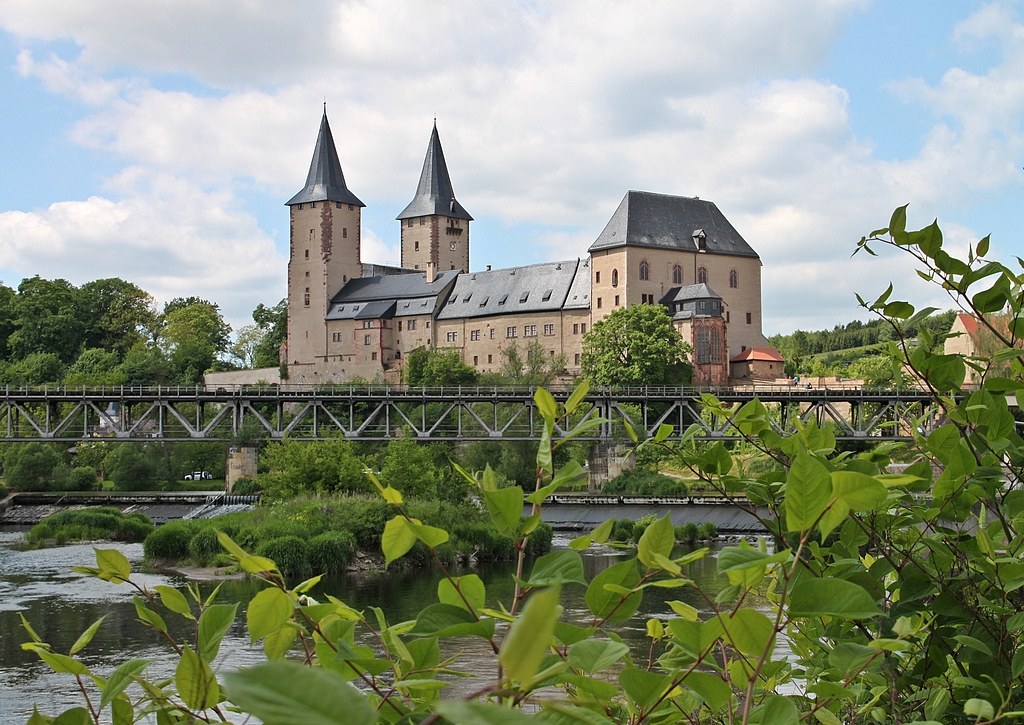
A limited walk after the castle helps explain the setting of the large building. Consider it from different publicly accessible directions. The photograph shows its relationship with the Mulde; it is not a route description to a guaranteed viewpoint. Use current maps and local signs for the actual walk.
Keep the last break reasonably close to the later departure point. If adding a longer outdoor section, know the way back before setting out. Castle, a part of the town and a meal already form a complete selection for one day. Other places in the Mulde valley do not need to be added simply because they appear on the same regional map.