An old landmark in an open city space
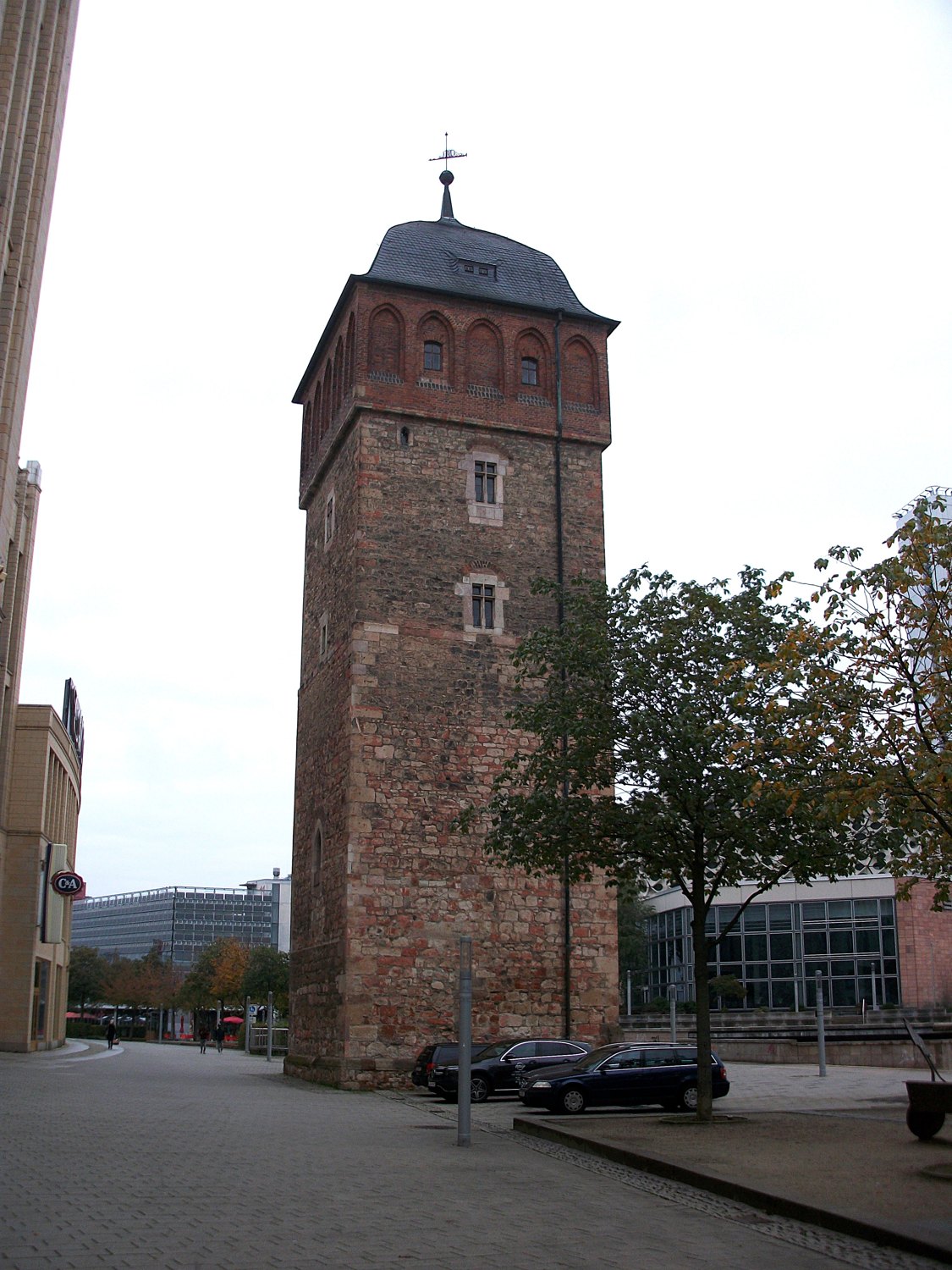
The Roter Turm does not appear at the end of a narrow medieval lane. Its setting is part of the reason to stop: an old tower stands among shopping routes, open spaces and much younger buildings. Before walking straight to its entrance, look at how it sits in the present-day centre. Notice the directions from which people approach and the points where the tower becomes useful for finding your way.
Chemnitz describes it as the city's oldest landmark. Its history includes several functions, so treating it simply as a surviving piece of city wall misses some of the story. Look at the masonry and the transition to the upper section. Changes in material and arrangement are visible without specialist knowledge. For precise building phases, however, use the city's explanation or information from the association that looks after the tower rather than guessing from stone colour.
Make a small circuit
Approaching from the market square or Straße der Nationen helps connect the landmark with the surrounding centre. The nearby Galerie Roter Turm is a shopping centre; it is not another name for the historic tower. Keep that distinction in mind when checking opening information or putting an address into a map.
For photographs, a second position a few steps away can be more useful than a different camera setting. Close views show surface detail; a wider view explains the tower's relationship with the city. Leave space for pedestrians and watch for crossings or delivery vehicles. Avoid stepping backwards into a route while concentrating on the screen. Including some of the surroundings often produces a more informative picture than tightly cropping the tower.
Separate an exterior stop from an interior visit
Looking around outside is easy to add to a walk. Interior access is a different matter and should not be inferred from the opening hours of neighbouring shops. Check the association or municipal information for available visits, exhibitions or guided tours, including any booking arrangements.
If the building is closed, the stop still has a purpose. Continue towards the market square or Brückenstraße after examining its different sides. With a limited gap between appointments, a careful exterior circuit is preferable to squeezing in an uncertain visit. Children can look for changes in materials and window shapes, turning a quick photograph into a small observation exercise. Leave any questions about its construction for a later look at the official history rather than trying to settle everything while standing beside the entrance.