Enter with a question
Schloßbergmuseum works particularly well after an initial walk through Chemnitz. Having seen streets, churches or squares, you can ask how the present city relates to earlier ways of living. It can also begin the visit: afterwards, choose a place outdoors that you encountered in a historical image or explanation.
Before entering, decide whether city history, medieval art or the building itself interests you most. These subjects overlap but require different kinds of attention. Trying to read everything with equal care can make time feel tight. A focus leaves room for unexpected objects without turning the entire circuit into a task to complete.
Notice the rooms
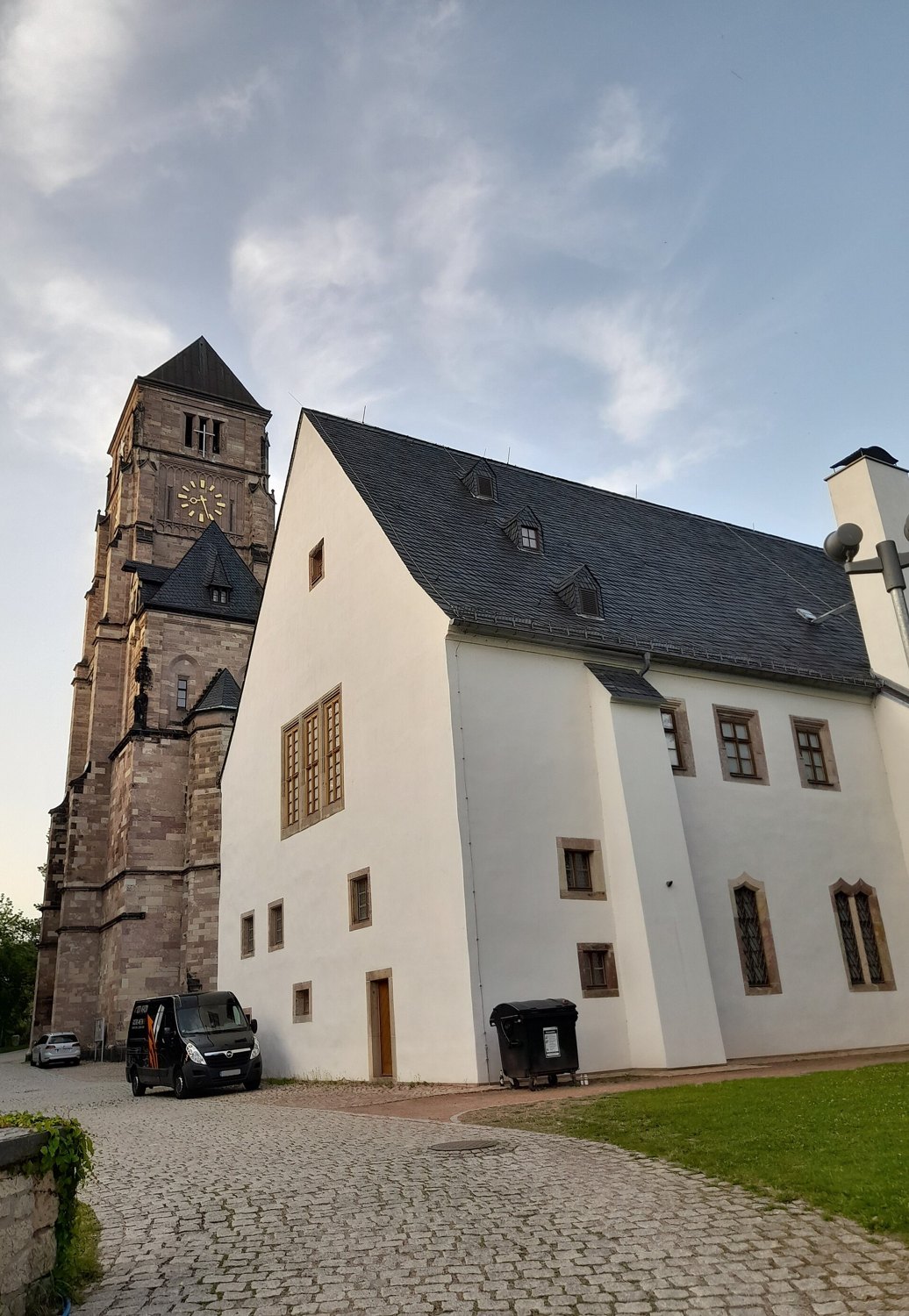
The museum occupies former monastic and palace spaces. Architecture is therefore part of the experience rather than a neutral container. Observe changes in room size, openings and light. An object feels different in a historic setting, but that effect should not be confused with evidence that it originally stood in precisely that place.
If uncertain, ask which elements survive, which have been reconstructed and which belong to the present museum arrangement. A coherent display does not mean that everything visible comes from one period. Separating observation from explanation makes the visit more accurate without requiring a complete knowledge of the building's history beforehand.
Understand history through individual things
The collection contains several kinds of historical objects. Occasionally choose something that initially appears modest and read its label fully. Who used it, what was it made for, and why has it entered a museum? An everyday object can reward these questions as much as an immediately striking artwork.
A historical city view invites comparison with your own walk. Look beyond buildings that have disappeared. The chosen viewpoint and the people included may matter too. An image is a source with a perspective, not an automatically complete record of the city at that time.
Textiles or furniture can lead towards questions of material, use and social setting. Note one interesting relationship instead of several isolated dates. Remembering how an object reveals a way of living or an occupation is often more useful than memorising its year. If photography is permitted, record the label for personal reference so that you do not later confuse the object's origin and significance.
Change your pace for medieval sculpture
The presentation of Gothic sculpture offers a different approach from chronological urban history. Spend time with one figure: posture, direction of the gaze and clothing are visible features you can describe without specialist knowledge. Then read the interpretation and compare it with your first impression. The object remains central, with the text supporting the act of looking.
Do not confuse today's museum setting with the earlier use of a sacred object. Its origin, original context and later survival may tell different stories. If a guided visit is available, this is an area where additional explanation can be valuable. Check the subject of the tour rather than only its starting time.
Use stone fragments to connect with the city
The museum setting also includes a lapidarium containing architectural fragments. It can connect indoor interpretation with the buildings outside. A portal section or worked stone surface is evidence of a larger structure. Consider its possible function, then compare your idea with the explanation rather than allowing the guess to become a fact.
There is no need to follow immediately with another museum. The Schloßberg surroundings offer an outdoor ending, provided the gradient and weather suit your group. A pause may be more useful than another substantial programme item.
Before travelling, check current opening, admission and temporary exhibitions with the Kunstsammlungen. Discuss particular access needs specifically, because a historic building may require different routes from a modern museum. A chosen focus and time for a few objects can make this more than a collection of names and dates. It also gives the walk back through Chemnitz something concrete to connect with, rather than leaving the museum entirely separate from the rest of the day.