A working place with new uses
Schönherrfabrik is one of the places where Chemnitz’s industrial history exists beyond a museum display. Different businesses and activities now occupy the complex. A visit can therefore begin with an event, a shop or another explicitly public destination. The entire site is not a museum in which every building is available for casual exploration.
Before travelling, consult the current directory and choose something that actually interests you. Check that operator’s entrance and opening arrangements. The address of the overall site is not always enough for a large complex. If an event takes place in a particular building, save that detail with your booking. It avoids a search among similar-looking façades shortly before the event begins.
Connect machinery with architecture
The Schönherr name is associated with loom manufacture; the company history gives an important place to Louis Ferdinand Schönherr and 1851. That is enough context to begin looking: this was not simply about finished cloth, but about machines used in production. It helps explain Chemnitz’s industry as a network of businesses and stages of work rather than a collection of isolated factory names.
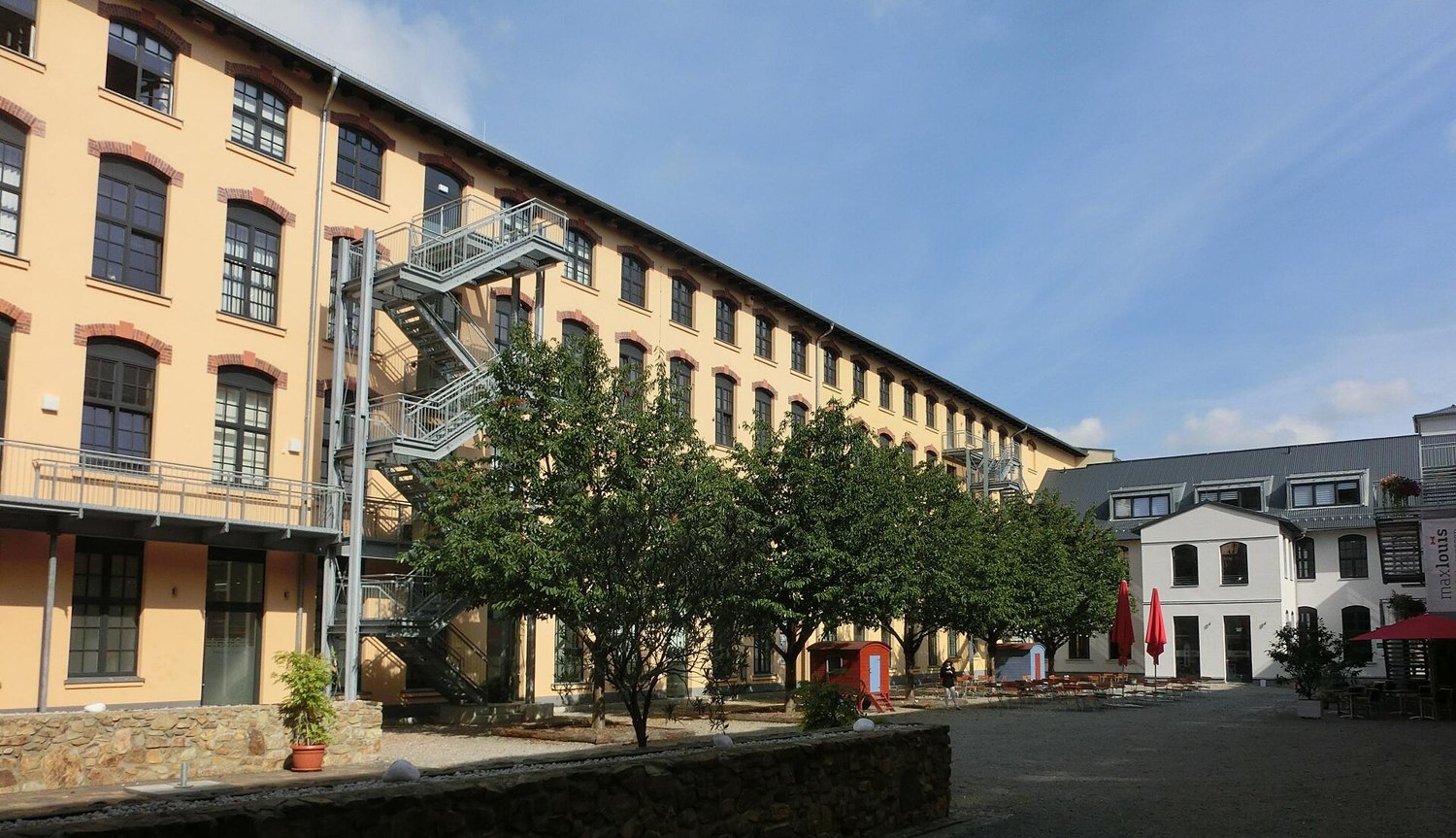
Examine the visible buildings with that relationship in mind. Which spaces might have needed abundant light? Where are the large openings, and where do windows repeat in long rows? Such features allow observations about spatial organisation but do not prove the former purpose of a particular room. That requires a label, a guide or a historical source. Keeping visible evidence separate from a confirmed explanation makes your reading of the place more precise.
Notice different building decisions
A factory complex that developed over time need not resemble a single coordinated design. Look at the joins between sections. Materials, floor heights, window shapes and rooflines may change. Ask whether a section connects other buildings or forms an independent block. You do not need to guess a construction date to recognise that several architectural decisions are present.
A photograph taken from a little further away often explains these relationships better than a tightly cropped façade detail. Try including two adjoining sections first. A closer image can then record something that disappears in the overall view. Avoid photographing through office windows or into rooms not open to visitors. An industrial appearance does not turn present-day workplaces into public exhibits.
Enter for a specific purpose
When visiting a public venue, notice how its activity occupies the existing architecture. Does the interior respond to large windows or an unusual ceiling height? Are older building elements left visible, or does the new function dominate the room? You can ask yourself these questions during an ordinary visit without expecting employees to provide an unannounced architectural tour.
Not every activity on the site welcomes spontaneous visitors. Some rooms serve appointments, classes or everyday business. Read the individual operator’s information and respect closed entrances. If industrial history is your main interest, look for an expressly advertised guided visit. A ticket to an event in one room does not provide general permission to tour the entire complex.
Give the stop a reason
The site can be connected with other traces of industry in Chemnitz, but it works better than a hurried photo stop between distant destinations. With a booked event, the sequence is straightforward: arrive in time first, then look at accessible outdoor areas afterwards. Without a booking, identify an open public destination in advance so that the journey does not end beside a series of locked doors.
When comparing Schönherrfabrik with an industrial museum, remember their different purposes. A museum collects and explains; a reused factory has to function from day to day. That distinction is central to the interest of the site. You can consider not only what has survived, but also which new activities have found space and how they work with the existing fabric. Leave with one specific observation, perhaps a visible junction between old structure and new use, rather than claiming a complete history from the façades alone.