See the house as a connected design
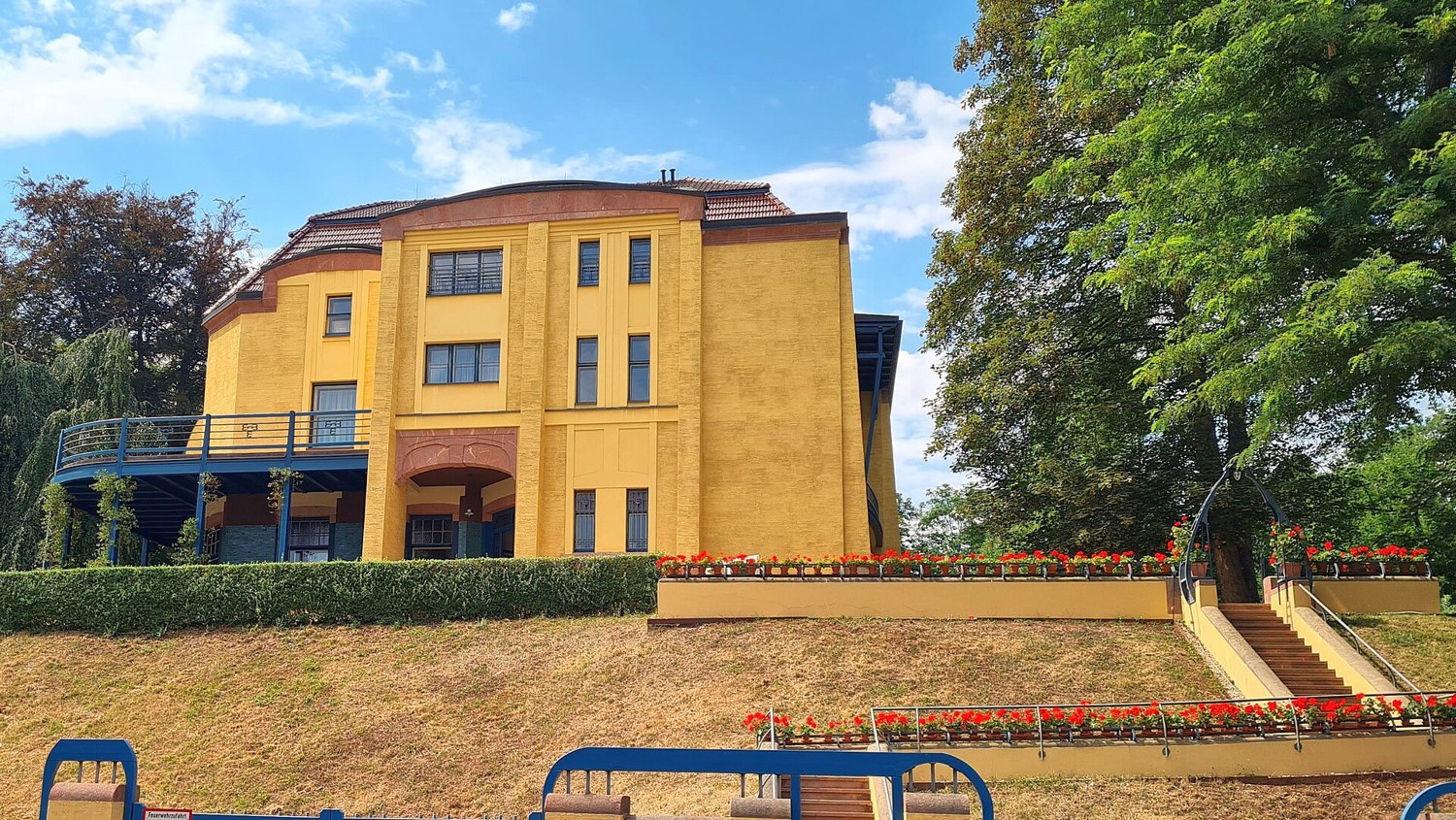
Villa Esche suits visitors who want to consider architecture beyond its exterior. Henry van de Velde designed the house for the family of textile manufacturer Herbert Esche. The museum emphasises the relationship between living and design. A useful question for the visit is therefore how the building, rooms and furnishings work together.
Spend time with the outer form before entering. Where are larger windows placed, how is the entrance expressed, and how does the house sit within its grounds? Those observations can help you notice different relationships inside. You do not need a complete history of design styles; a few remembered details are enough to compare with the experience of the rooms.
Distinguish museum admission from a house tour
The Henry van de Velde Museum occupies part of the villa. The building also hosts events, and separate tours of the house are offered. These are different visiting arrangements. Check what ordinary museum admission includes and what an additional guided tour covers. Ask specifically if certain rooms are the main reason for your journey.
The official description identifies the former dining room and music salon alongside a further presentation of design work. This should not be taken to mean that the entire property is freely accessible on every visit. Reading the details of the offer helps avoid disappointment and makes it easier to allow an appropriate amount of time.
An event ticket also serves a different purpose from museum admission. Coming for an evening programme does not automatically include an extensive tour beforehand. Equally, events may affect the use of particular areas. Current information from the museum and the relevant organiser is the basis for planning.
Look for relationships within a room
Begin with the overall effect of an accessible room before examining furniture or surfaces separately. Which lines recur, how do objects relate to each other, and what difference do the windows make? Such questions treat design as a set of relationships rather than a collection of attractive individual pieces.
Compare what you can see with the interpretation of the original furnishing. Originals, later additions and reconstructed arrangements should not silently be treated as the same thing. A museum can explain precisely those distinctions. If a label is unclear, a question about one object is often more useful than asking broadly whether everything is original.
Consider a chair or table through its intended use. How might someone sit, reach or move around it? This is an imaginative exercise, not permission to try the furniture. Connecting form with use is enough. During a tour, translate those observations into questions and ask which interpretations are supported by evidence.
Visit without a long list of names
You do not need specialist knowledge to begin. Find two details that seem unfamiliar and one that feels unexpectedly familiar, then read the related information. This creates a personal route into the display instead of making the visit depend on reading every label in order.
With children, a brief search for shapes can work if it remains quiet and respects the exhibition rules. Avoid directing all their attention towards delicate furniture that may then seem tempting to touch. Lines in walls, windows and room divisions also offer comparisons. A shorter attentive visit is preferable to a longer one dominated by repeated reminders about behaviour.
Arrange the approach and ending
Check the visitor address and, if driving, any separate directions for parking access. The official information distinguishes these details. On foot, inspect the final approach and possible slopes on a map. For particular access needs, ask about the actual route to the rooms you want to see rather than relying on a general accessibility label.
After the museum, another exterior look can bring the observations together. A window or side of the building that seemed unremarkable on arrival may now make more sense. Refreshments are a separate decision governed by the business's opening and availability. There is no need to schedule another large museum immediately afterwards. Villa Esche rewards enough space in the day to understand its design as a connected whole.