A residential district, not a display set
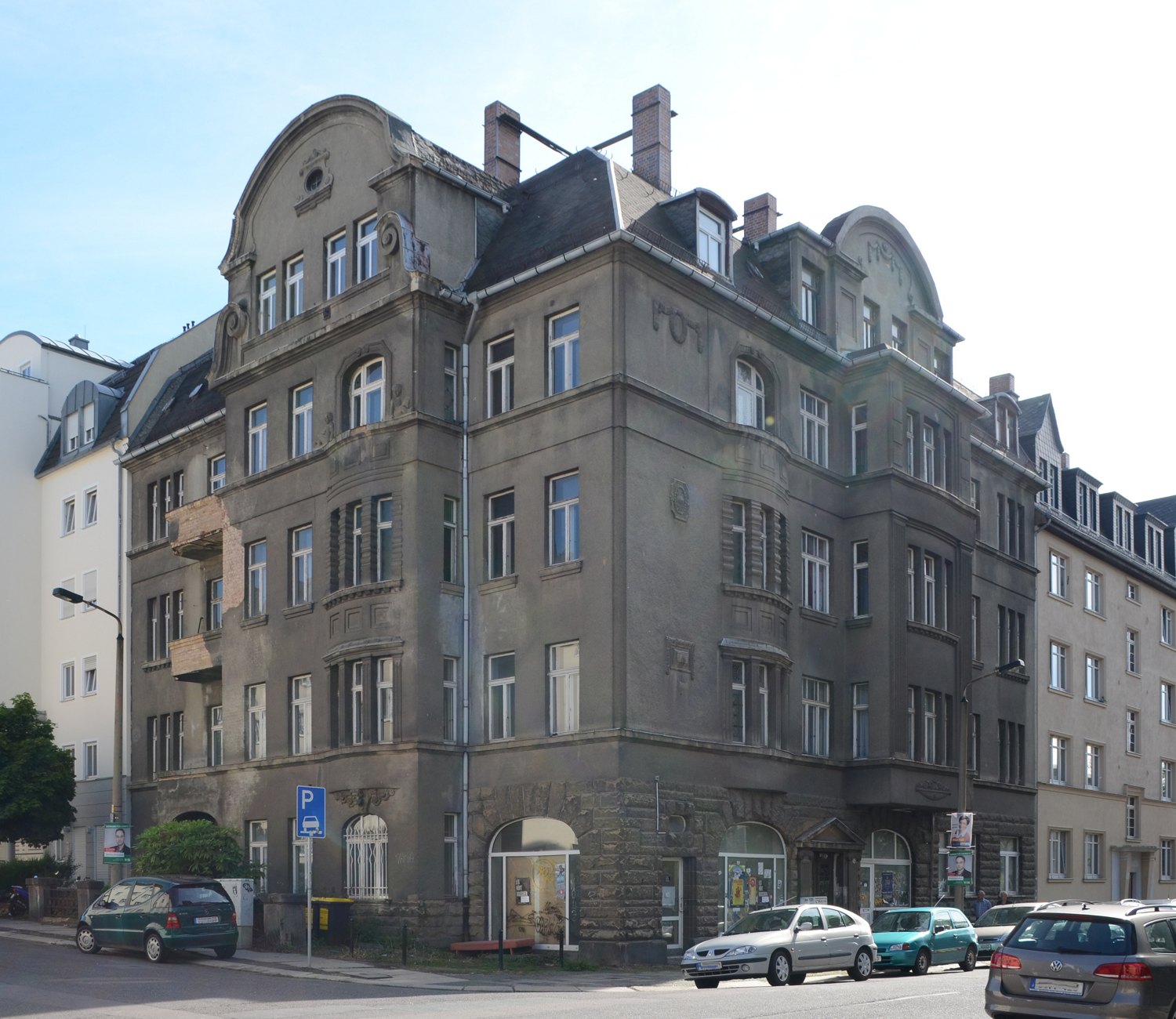
Kaßberg is known for streets shaped by late nineteenth-century development and Art Nouveau. The official tourism information emphasises the continuous urban fabric and decorated façades. For a walk, the consequence is simple: the effect comes from a sequence of buildings rather than one house carrying the whole visit. Choose neighbouring streets instead of compiling a long list of widely separated addresses.
Start with a manageable area around Weststraße and add side streets you can easily identify on a map. Henriettenstraße, for example, gives opportunities to compare corner buildings with houses along straight stretches. The exact loop can follow the direction from which you arrive. Resist turning every attractive façade into a reason for another detour.
Move from the street to the detail
First look along a complete row. Notice roofs that interrupt the outline, projecting sections and the treatment of corners. Then examine a balcony, doorway or window surround more closely. Working in that order prevents architecture from becoming a collection of ornaments with no relationship to the street.
Variety is more interesting than applying one stylistic label to the entire district. Decoration alone does not make a building Art Nouveau. If a particular house interests you, choose a specialist tour or consult a heritage description afterwards. During the walk, accurate observations are enough: a curved line, geometric pattern, projecting bay or strongly marked entrance.
Compare two adjacent buildings. Their height, floor divisions and apparent uses immediately create questions. A sketch can record two versions of the same window arrangement. A photograph should include enough context to preserve the comparison later. None of this requires entering the buildings or searching for access to their staircases.
Make privacy part of the route
People live and work behind these façades. Stay on public paths, leave entrances clear and avoid pointing a camera into homes. An open courtyard gate is not a visitor entrance. The fact that other people are taking photographs does not change the status of a private property unless public access is explicitly indicated.
Groups are easier to accommodate if explanations happen at a wider point and people then move on with space between them. A line of visitors standing shoulder to shoulder can occupy an entire pavement. If booking a guided walk, check whether its focus is architecture, social history or underground spaces. These are different experiences, even when advertised under the same district name.
Give Marianne Brandt a separate place in the day
Marianne Brandt House adds design history to an architectural walk. Visiting it requires a separate check of current access arrangements. Treat it as a deliberate stop rather than a doorway you expect to find open by chance. Looking at the work of a particular designer adds a different kind of depth from another sequence of exterior views.
The vaults beneath Kaßberg are also described in tourism information. That does not make them freely accessible during an ordinary street walk. If they interest you, find a suitable visit and check its requirements. The architecture above ground can be explored independently of an underground tour.
Finish before attention runs out
End the circuit while you are still noticing differences. A small area examined carefully is often more memorable than several kilometres without a pause. Choose refreshments from a business actually open along your route; a general description of the district cannot replace current restaurant information.
For the return to the centre, save a specific junction or stop. Kaßberg is an area, not a single viewpoint that a map can always interpret in the way you intend. On a later visit, choose another side street or a new theme, such as balconies and bays. That creates a second walk with its own purpose rather than repeating the first route without a different way of looking.